por Sergio | Jun 19, 2026 | crypto 15
Customizing Target Profit Margins and Trailing Stop-Loss Protection Natively Within the Primary Portal Layout

Integrating Profit Targets Into the Core Interface
Modern trading platforms now allow users to define target profit margins directly on the primary dashboard without switching to secondary menus. This native integration reduces reaction time during volatile markets. By setting a percentage-based or fixed-price target, traders automate partial or full position closures when the market moves favorably. For example, a trader holding Bitcoin can input a 15% profit target in the order panel, and the system executes a limit sell once that threshold is reached. This functionality is especially critical in fast-moving crypto markets where manual exits often miss peaks.
To access this feature, locate the «Take Profit» field within the main trading panel. Most portals embed it alongside the order entry form. You can set multiple targets-say, 10% for half the position and 20% for the remainder. This layered approach locks in gains while leaving room for further upside. For advanced users, the crypto trading hub offers dynamic profit margin customization that syncs with real-time volatility indicators, ensuring targets adjust as market conditions shift.
Configuring Trailing Stop-Loss Limits
How Trailing Stops Work in the Primary Layout
Trailing stop-losses automatically adjust the exit price as the asset’s value rises, protecting profits while limiting downside. In the primary portal, you set a trailing distance-either a fixed percentage (e.g., 3%) or a dollar amount. If the price climbs, the stop-loss moves up proportionally. If the price drops by the set distance, the position closes. This eliminates the need to manually update stop orders during trends.
Step-by-Step Activation
Within the main trading window, find the «Stop Loss» section. Toggle the «Trailing» option. Enter your trailing value (e.g., 5%). Then specify whether it trails the current price or the highest price since entry. For instance, if you buy Ethereum at $3,000 with a 5% trail, the stop activates at $2,850. If ETH rises to $3,200, the stop moves to $3,040. The system handles all calculations server-side, so no latency affects execution.
Combining Both Features for Risk Management
Using profit targets and trailing stops together creates a balanced strategy. Set a primary target to secure early gains, then let a trailing stop protect the remaining position. For example, on a Bitcoin trade, you could set a 10% profit target for 50% of your stake and a 4% trailing stop for the rest. This ensures you capture partial profits while giving the trend room to develop. The primary portal layout displays both parameters in a single view, allowing you to adjust them without opening pop-ups.
Advanced traders can also use conditional logic: if the trailing stop triggers, the system cancels pending profit targets. This prevents conflicting orders. Some platforms support visual sliders for both parameters, making adjustments intuitive. Testing these configurations on demo accounts before live deployment is recommended, as slippage can affect fills during high volatility.
FAQ:
Can I set different trailing stops for multiple positions?
Yes, each position has independent trailing parameters in the portal layout.
What happens if my profit target and trailing stop overlap?
The portal prioritizes the take-profit order; trailing stops remain active only for remaining size.
Do trailing stops work during after-hours trading?
Yes, they function 24/7 on crypto trading hubs, but liquidity gaps may widen slippage.
Can I modify profit targets after the trade is open?
Absolutely-drag the visual slider or edit the numeric field directly in the position management panel.
Are these features available on mobile versions?
Most primary portals offer a responsive mobile layout with identical customization options.
Reviews
Marcus T.
Finally, I set trailing stops without third-party tools. The interface is clean, and execution is instant. Saved me 12% on a recent ETH trade.
Elena R.
Custom profit margins in the main window changed my workflow. I now layer targets easily. The 20% target on SOL worked perfectly last week.
James K.
I was skeptical about native trailing stops, but they perform better than my old bot. No lag, no missed moves. Highly recommend testing it.
por Sergio | Jun 19, 2026 | crypto 15
Customizing Interface Layouts and Notification Alerts on a High-Frequency Trading Online Platform
1. Designing Your Trading Workspace for Speed
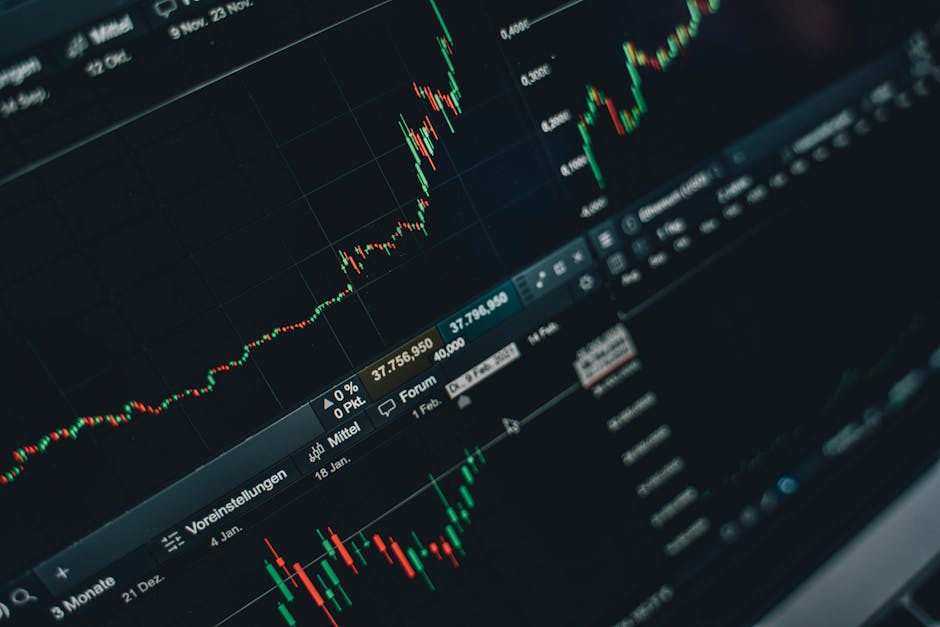
On any high-frequency trading online platform, the interface layout directly impacts reaction time. Most platforms allow you to rearrange modules such as order books, charts, and trade tickets. Drag-and-drop functionality lets you position the most critical data-like bid-ask spreads or recent fills-at eye level. Grouping related tools into tabs or floating windows reduces clutter and prevents accidental trades.
Grid and Multi-Monitor Support
Advanced platforms offer customizable grid systems. You can lock panels to specific positions or create multiple workspace profiles. For example, one profile can display a heat map and Level II data, while another focuses on chart patterns and execution history. Multi-monitor setups allow you to stretch a single workspace across screens, displaying price ladders on one and news feeds on another. This segmentation prevents information overload during volatile sessions.
Keyboard shortcuts are equally vital. Assign hotkeys to switch between layouts, toggle dark mode, or execute predefined trade sizes. The goal is to minimize mouse movements and cognitive load, enabling split-second decisions without breaking concentration.
2. Configuring Notification Alerts for Precision
Alerts in HFT environments must be distinct and actionable. Generic pop-ups are useless; instead, use conditional triggers. Set price-based alerts for specific timeframes, such as a breakout above a 10-second moving average. Volume spikes or unusual order book imbalances can trigger audible alarms or color-coded signals on the interface.
Multi-Channel Delivery
Modern platforms support push notifications to mobile devices, desktop toast messages, and even email for non-urgent updates. Prioritize alerts by urgency: critical signals (e.g., stop-loss triggers) can flash red and produce a continuous tone, while informational updates (e.g., daily P&L changes) appear as subtle banners. Avoid alert fatigue by limiting notifications to events that genuinely require your attention.
Customizing alert parameters per instrument is another layer. For highly liquid pairs, set tighter thresholds; for illiquid assets, widen the range to reduce noise. Some platforms allow script-based alerts using proprietary languages, enabling complex logic like “alert if spread exceeds 0.5% and volume drops below 100 contracts.”
3. Balancing Performance with Visual Complexity
Every added widget or alert consumes system resources. On an online platform, excessive customization can lag the interface during peak data streams. Use lightweight chart types (candlesticks over tick bars) and disable real-time rendering for seldom-used panels. Test your setup under simulated high-frequency conditions to identify bottlenecks.
Consider using API-driven custom dashboards if the platform supports it. Directly pulling data via WebSocket reduces overhead from built-in visualization layers. Also, schedule automatic resets for alert thresholds after each trading session to prevent stale rules from triggering false signals. A lean, well-tuned interface is faster than one packed with every possible tool.
FAQ:
Can I save multiple layout profiles for different trading strategies?
Yes, most platforms let you save and switch between profiles. For example, one profile for scalping with minimal charts, another for arbitrage with multiple order books.
How do I set alerts based on order book imbalances?
Use conditional alert rules linked to the bid-to-ask ratio. Some platforms have built-in imbalance indicators; otherwise, write a simple script using the platform’s API.
Will too many alerts slow down my platform?
Yes, excessive alerts, especially with complex audio files or animations, can degrade performance. Stick to lightweight triggers and limit alerts to 5–10 active rules.
Can I receive alerts on my smartphone while away from the desk?
Most platforms offer push notifications via mobile apps. Configure them for urgent events only, such as stop-loss hits or margin calls, to avoid distraction.
Is it possible to share custom layouts with other traders?
Many platforms allow exporting layout files (e.g., JSON or XML) that can be imported by others. Check your platform’s documentation for sharing options.
Reviews
Marcus T.
I configured three different layouts for morning, afternoon, and news events. The grid system let me place Level II data exactly where I need it. Alerts are now color-coded, so I can react without reading text.
Elena R.
Customizing alerts for volume spikes saved me from several false breakouts. I use a separate workspace for scalping with only two charts and a trade ticket. It feels much faster than the default setup.
James K.
The multi-monitor support is a game-changer. I have one monitor for price ladders and another for news. I also set keyboard shortcuts to switch profiles instantly. Highly recommend tweaking your layout before going live.
por Sergio | Jun 19, 2026 | crypto 15
Connecting with Decentralized Autonomous Organization Members Inside a Secure Global Online Hub Community

The Architecture of a Secure DAO Hub
Decentralized Autonomous Organizations (DAOs) operate on trustless principles, but their communication often relies on centralized platforms like Discord or Telegram. This creates a vulnerability: metadata leaks, IP logging, and centralized server control. A secure global online hub solves this by combining end-to-end encryption with on-chain identity verification. Members connect via wallets, not emails, ensuring that every participant is a verified token holder without exposing personal data.
These hubs use zero-knowledge proofs for membership verification. Instead of revealing your wallet balance or transaction history, you prove you hold a specific NFT or governance token without disclosing the details. The hub then grants access to channels, voting rooms, or treasury discussions. This system prevents Sybil attacks and ensures that only legitimate members participate in sensitive conversations. For example, a DAO treasury manager can host a closed meeting knowing that every attendee has passed a cryptographic check.
Real-Time Governance and Voting Integration
Inside the hub, members can initiate and vote on proposals without leaving the platform. Smart contracts are embedded directly into the chat interface. When a member submits a proposal, it triggers a vote that records results on-chain. This eliminates the friction of switching between a messaging app and a governance dApp. The hub also supports delegated voting, allowing members to assign their voting power to trusted peers within the same secure environment.
Privacy-First Communication Tools
Standard messaging apps store your messages on centralized servers. A secure global hub uses peer-to-peer encrypted channels where messages are not stored permanently. Each message is split into fragments, encrypted, and routed through a distributed network. Only the intended recipient can reassemble and decrypt the content. This architecture makes it impossible for the hub operator or any third party to read conversations, even under legal pressure.
Voice and video calls within the hub are also encrypted. Unlike Zoom or Google Meet, which can be intercepted or recorded, the hub uses WebRTC with end-to-end encryption keys generated locally on each device. Participants can verify each other’s identity by scanning a QR code that matches their on-chain public key. This is critical for DAOs handling sensitive topics like tokenomics adjustments or legal strategies.
Identity Management and Reputation
Members can link their on-chain reputation to their hub profile. If a member has participated in past votes, contributed to code repositories, or earned badges from previous DAO activities, that history is visible inside the hub. This builds trust without requiring real-world names. New members can assess who is speaking based on their verifiable on-chain actions, not just their username.
Navigating the Hub: Onboarding and Etiquette
Joining a secure DAO hub typically requires holding a specific token or NFT. Once you connect your wallet, the hub scans your holdings and unlocks relevant channels. Some hubs use a tiered access model: basic token holders see general announcements, while multi-token holders access treasury discussions or strategy meetings. This structure keeps sensitive information compartmentalized.
Etiquette inside these hubs mirrors the decentralized ethos. Members are expected to use pseudonyms and avoid sharing personal identifiers. Spam is rare because each account is tied to a wallet with economic value-spamming could result in token slashing or reputation loss. Moderation is handled by elected community stewards who have limited power; they cannot read private messages, only remove content that violates on-chain rules.
For those new to DAOs, the hub offers guided tours and automated mentors. A bot matches newcomers with experienced members based on their token holdings and interests. This accelerates learning and helps build social capital within the community. The entire experience is designed to feel like a secure, gated network where every interaction has cryptographic backing.
FAQ:
How do I prove my membership without revealing my wallet address?
Use zero-knowledge proofs. The hub generates a cryptographic proof that you hold a required token, but your address remains hidden from other members and the server.
Can the hub operator read my private messages?
No. Messages are end-to-end encrypted using peer-to-peer protocols. The operator cannot decrypt them, and messages are not stored on central servers.
What happens if I lose access to my wallet?
You can use a social recovery feature. Pre-designated trusted members can help restore your access by signing a recovery transaction, without giving them control of your funds.
Are voice calls inside the hub secure?
Yes. Voice calls use WebRTC with local encryption keys. Participants can verify each other’s identity by matching on-chain public keys via QR code.
Reviews
Alex, DeFi Analyst
I work with three DAOs, and this hub eliminated the chaos of managing multiple Discord servers. The on-chain verification is seamless, and I no longer worry about phishing bots.
Maria, NFT Collector
The privacy features are unmatched. I can discuss floor prices and mint strategies without exposing my wallet history. The voice encryption is a game-changer for sensitive calls.
Tom, DAO Steward
We migrated our entire community to this hub. The governance integration reduced proposal voting time by 40%. Members feel safer sharing bold ideas.